
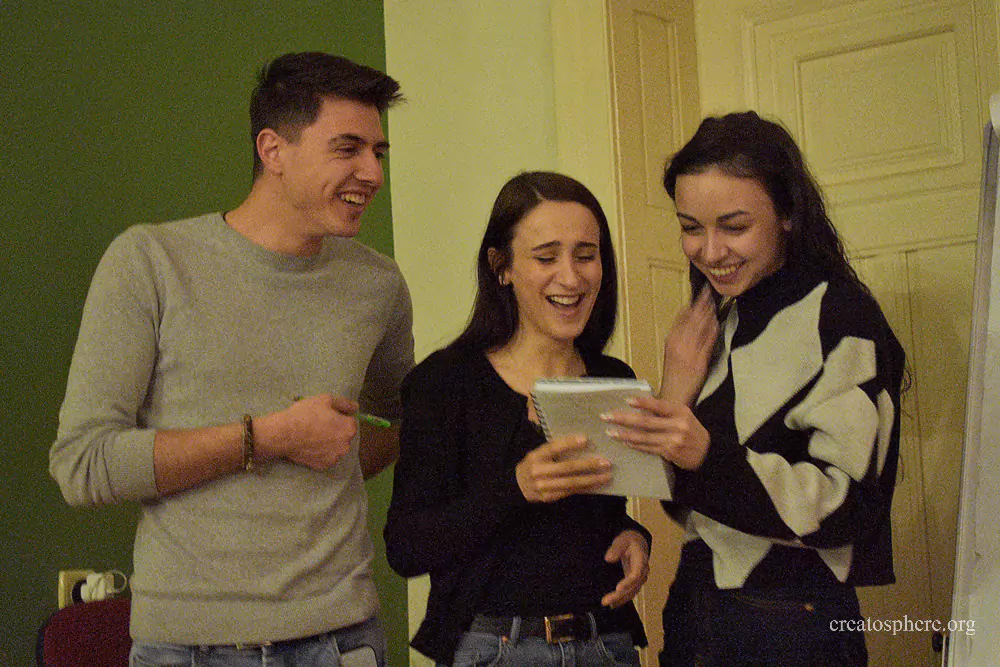
While brainstorming ideas for what to present to our future participants, our team came up with something unique to fulfil the demands of people who want to better their workshop design for groups in non-formal settings. We had the opportunity to host our first “Create Your Workshop” on March 22nd in Ellinor’s house in the centre of Sofia. This workshop was meant for anyone who is passionate about creating unforgettable learning experiences. Our objective was to give participants the chance to develop the knowledge and confidence they needed to create workshops with a lasting impact. 23 participants attended, including youth workers and young people too.
What happened?
Using a name and a motion, participants in the name game introduced themselves to start off the event. After that, Toni led an entertaining and engaging icebreaker that made everyone laugh and feel more comfortable.
Needs assessment and group work in workshop design
The trainers then introduced the contract activity, in which everyone was invited to contribute and put sticky notes on a flipchart, co-creating group agreements. This increased a sense of joint responsibility and engagement.
Participants then took part in the “2 Cards – Match and Team up” game to identify requirements such as communication, teamwork, self-development, conflict resolution, and stress/time management. We had participants divide up and work in groups based on their age and experience levels, answering questions like:
- What are my assumptions about the group?
- What might be difficult?
- What might be easy?
- How is this group different from others?
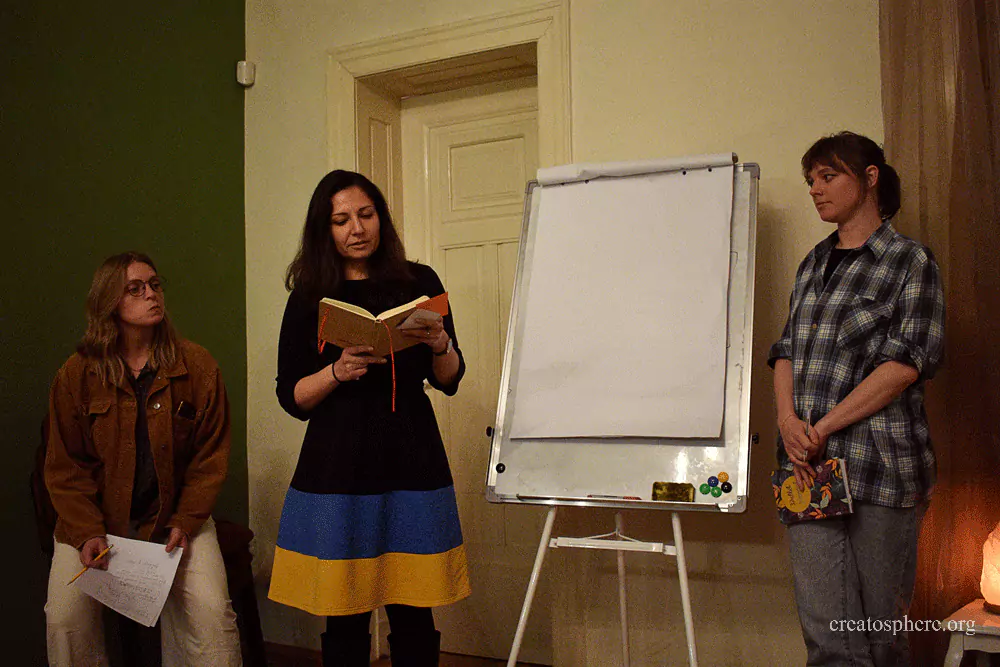
Each group presented their responses, resulting in a thorough understanding of their participants’ needs.
Theoretical frameworks and practical applications in workshop design
Toni then presented the Karin De Galan Chart, asking participants to complete it in groups after being assigned a random target audience to work with. This was crucial in understanding the analytical component of the workshop design process, which we selected to include on the agenda.
Participants proposed new workshops based on their evaluated needs. We then turned the attention to Kris, who explained the Kolb Cycle Method. Then, participants revised their program using this new framework before presenting it to the group again.
Individual reflection and group development in workshop design
Each participant developed an individual graph that detailed:
- What happened (events sequenced in time)?
- Their level of psychological comfort in the group
- Clarity on tasks, expectations, and what will happen next
- Their learning curve
Final reflection and closing
The final reflection session invited participants to discuss how these theories impacted their perspectives on workshop design. They shared what they learned from the day, and their future steps. We wrapped up with a sticky note feedback session, in which everyone shared their opinions and suggestions.
Outcomes and community building
By the end of the program, participants felt more confident in designing a two-hour workshop and had the tools to effectively translate their knowledge. They left feeling inspired to keep learning and motivated to implement what they had learned in future programs. Several attendees expressed a desire to stay connected and participate in future Creatosphere events. This led to the creating the Creatosphere Community on Facebook.
You could say that it was more than simply a learning opportunity; it marked the start of a community of dedicated facilitators and learners. And we are excited to see what fantastic workshops our participants will develop, and we can’t wait to continue this adventure with them.


 This is my inspiration for this theme and it is something I recently discovered as a mindset. I found new logic for my entire life through caring for another and how much hope that brings to an individual when they have to do things to make another creature’s life better and not their own. Which of course makes everyone in the equation happy.